
Folding Stoves and Tailgating Setups for Quick Game-Day Cooking
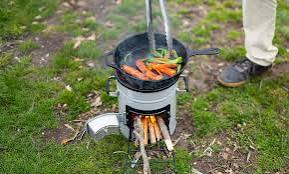
The best tailgate meals are the ones that don’t keep you trapped behind a grill. Kickoff is in ninety minutes, your crew is already circling the cooler, and nobody wants the cook spending the whole pregame tending charcoal. The trick isn’t cooking faster — it’s setting up smarter.
Why Speed Is the Whole Game on Game Day
Traditional tailgating gear was built for a different era of football: charcoal grills that need twenty minutes of lighting and tables that eat half the truck bed. That works fine when the tailgate is the event. But for most fans, the tailgate is the prelude, and every minute spent fussing with gear is a minute not spent with friends and not in your seat.
A speed-first setup flips the priorities. Every piece of gear should earn its place by doing one of two things: setting up in under two minutes, or folding flat for pack-out. Time your current setup honestly — from popping the tailgate to food hitting heat. If it’s over fifteen minutes, something needs to go.
Choosing Your Folding Stove
This is where a dedicated tailgating stove changes the math. A good folding unit collapses to the size of a small briefcase, unfolds in seconds, and gets a pan to cooking temperature in three to four minutes — no waiting for coals to ash over.
Look for three things when choosing. First, a stable base that won’t wobble on uneven asphalt. Second, real heat control — a simmer setting matters more than a massive BTU rating, because half your game-day menu will be finishing or holding while you assemble plates. Third, wind resistance. Stadium lots are wind tunnels, and a naked flame in a crosswind is both slow and wasteful.
A two-burner folding stove is the sweet spot for groups of four to eight. One burner runs the main event while the second handles coffee, chili warm-ups, or a side pot. The second burner buys you parallelism, and parallelism is what makes a 15-minute cookout possible.
The 15-Minute Parking-Lot Kitchen
Gear is only half the equation. The other half is layout — where everything sits relative to the cook. A speed setup is an assembly line, and you build it the same way every time.
The five-minute unpack. Park and work in a fixed order: stove first, then windscreen, then fuel, then prep surface, then cooler, then trash. The cook pulls the stove and fuel while someone else sets the prep table and opens the cooler. What you need first comes out first.
The cooking triangle. Heat on one side, prep in the middle, serving on the third — nobody takes more than two steps between any two points. Keep pre-portioned ingredients in a single flat bin on the prep table. Trash gets a dedicated hanging bag on the cooler handle.
The seven-minute pack-out. The moment the last plate is served, someone starts teardown: burner off, stove wiped and folded, tables collapsed. Loose items go into one “everything” bin — you’ll sort at home. On the lot, the goal is a clean rectangle of asphalt in under seven minutes.
Fuel Planning: The Invisible Bottleneck
Nothing kills a quick tailgate like running out of fuel — or carrying three canisters “just in case.” For a three-hour tailgate with two burners running half the time, a single one-pound canister is usually plenty, but nobody wants to do that math in a parking lot at 8 AM.
So make it a rule: one full canister in use, one full canister in reserve, always. The reserve never leaves the vehicle until it’s needed, which means it never gets forgotten on the garage shelf.
15-Minute Game-Day Recipes for the Folding Stove
Flat-top breakfast hash. Dice potatoes at home and par-boil them — that single prep step cuts parking-lot cooking from twenty minutes to eight. Crisp the potatoes five minutes on a hot folding camping stove, push aside, crack in eggs or add pre-cooked sausage, and finish in one pan. Serve in tortillas with hot sauce — about twelve minutes active.
Smash-style stadium burgers. Smash burgers cook in two minutes a side — far faster than thick patties — and a folding stove’s concentrated heat is ideal. Toast the buns on the second burner while the patties rest. Four burgers, two minutes apart, done before the radio pregame show finishes a segment.
Two-pot chili and hot cider. Transfer homemade chili to a wide, shallow pot — surface area is everything — and it goes from cooler to steaming in under ten minutes on medium-high. Keep a cider pot on low on the second burner for cold hands and late arrivals. Serve chili in paper boats. It tastes like you worked all morning; the lot never has to know.
Pack-In/Pack-Out Efficiency: Build a System
Even the fastest stove can’t fix a bad packing system. Build your tailgate around a simple principle: everything belongs to exactly one container, and every container has a home in the vehicle.
A three-bin system covers most setups: one flat bin for cooking gear (stove, windscreen, tools, fuel adapters), one for food and prep (pre-portioned ingredients, cutting board, seasonings), and one for serving and cleanup (plates, napkins, trash bags, paper towels). The cooler is the fourth container and never doubles as gear storage — mixing them means fishing around mid-cook.
Pre-stage everything the night before. Load the bins, check fuel, and run a literal checklist: stove, fuel plus reserve, lighter or matches, spatula, tongs, one good knife, cutting board, seasoning kit, trash bags, paper towels. If it’s not on the list, it doesn’t go.
Then keep the vehicle packed the same way every time. Containers go in last-out-first order: the cooking bin goes in last so it comes out first. It takes three tailgates to make it habit; after that, your fifteen-minute setup becomes muscle memory.
Cook less, tailgate more. The point of a tailgate was never the cooking — it was the people standing around the stove. A folding stove and a tight setup protect that, by giving you back the half-hour you’d otherwise spend wrestling with gear. Unfold, ignite, feed your crew, fold, and go watch the game. That’s the whole playbook, and it fits in the back of any SUV.